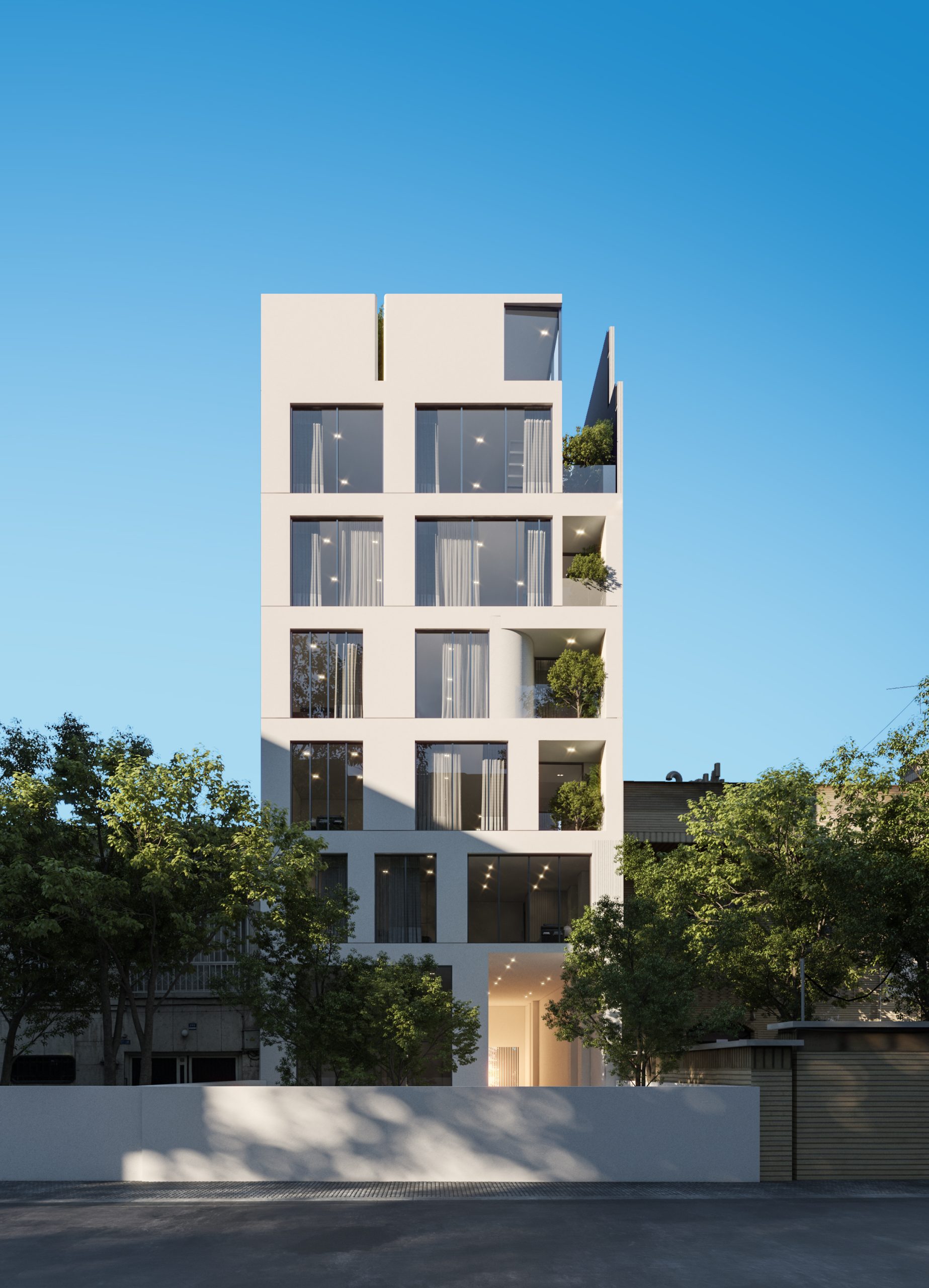
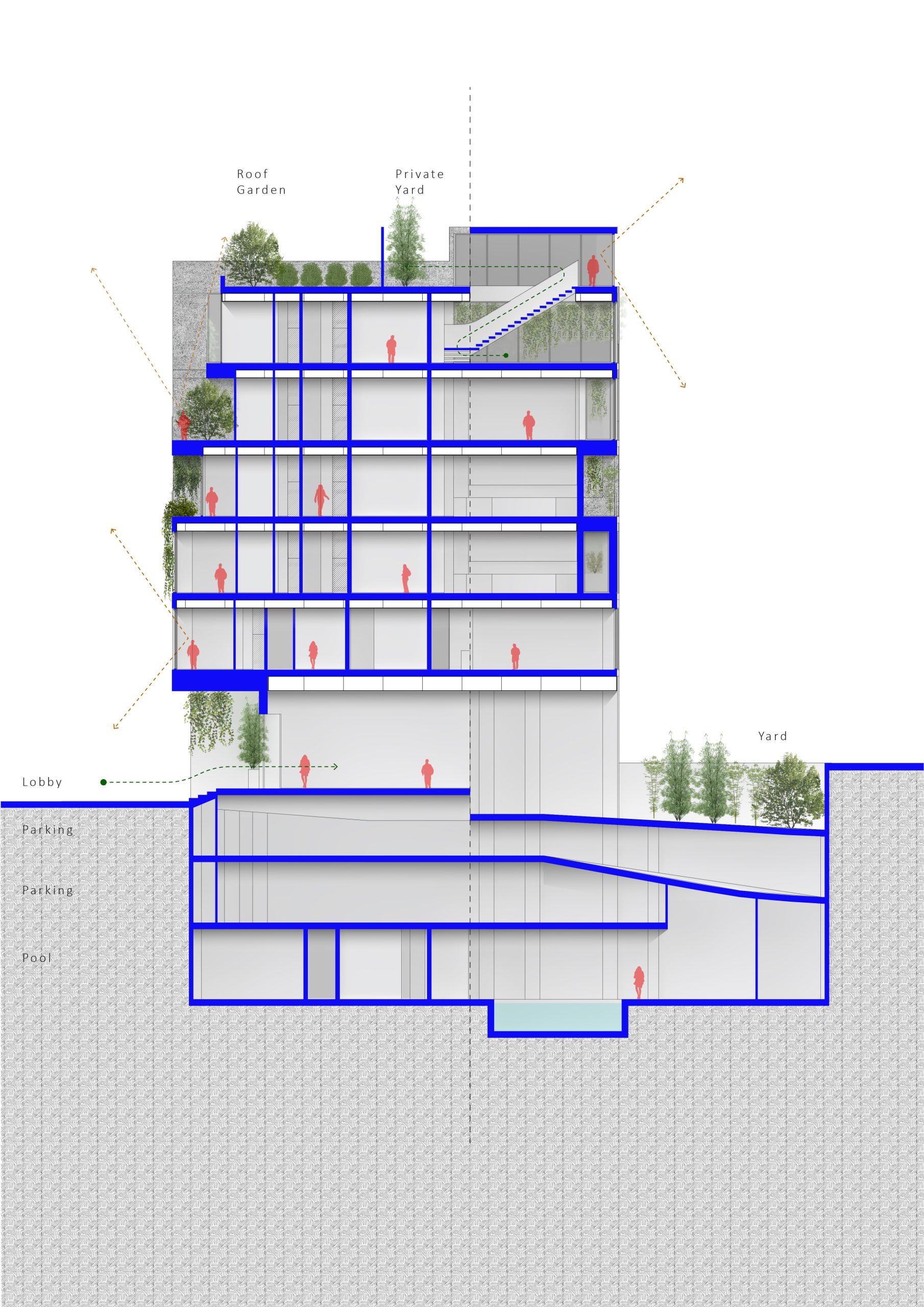
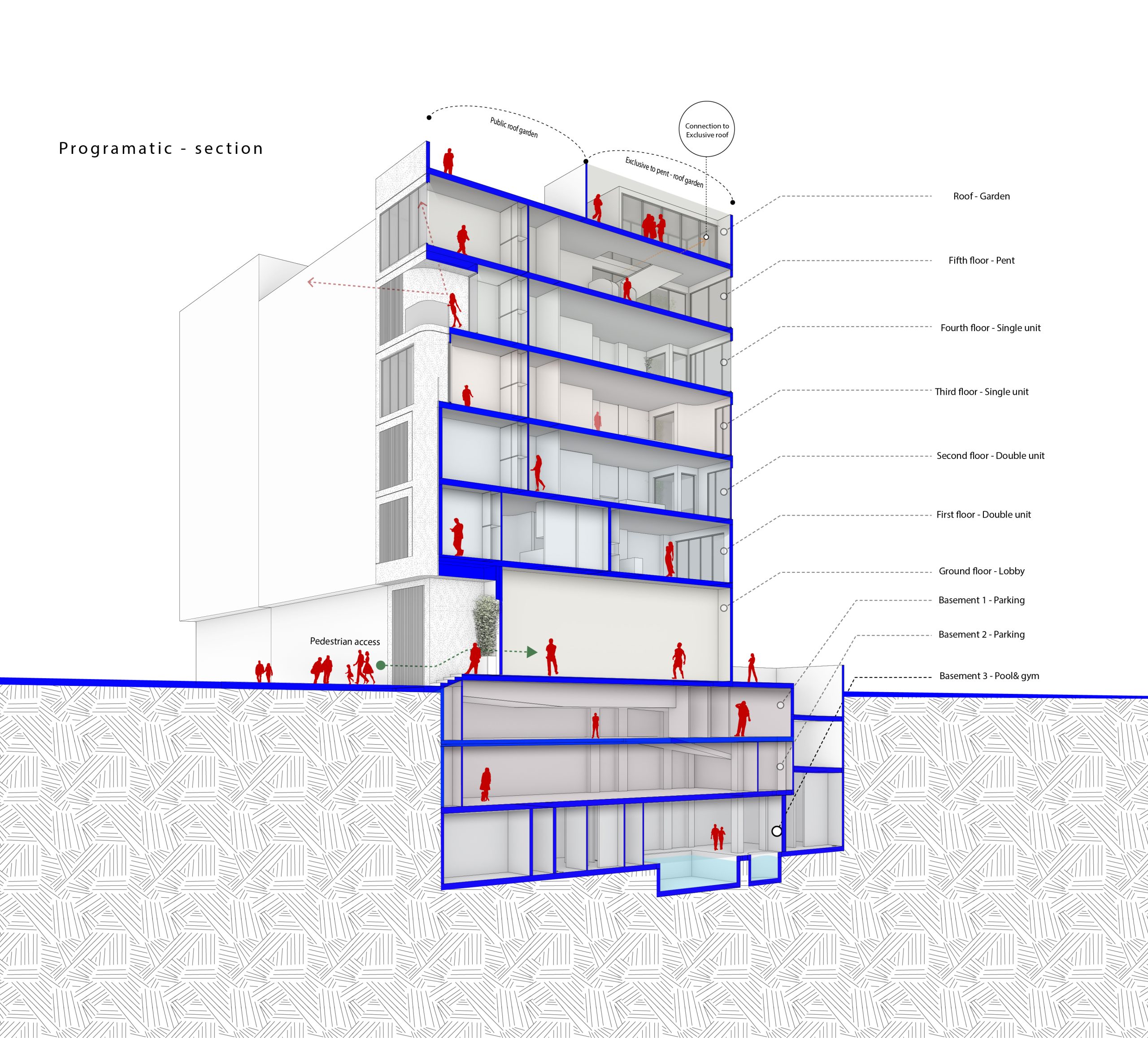
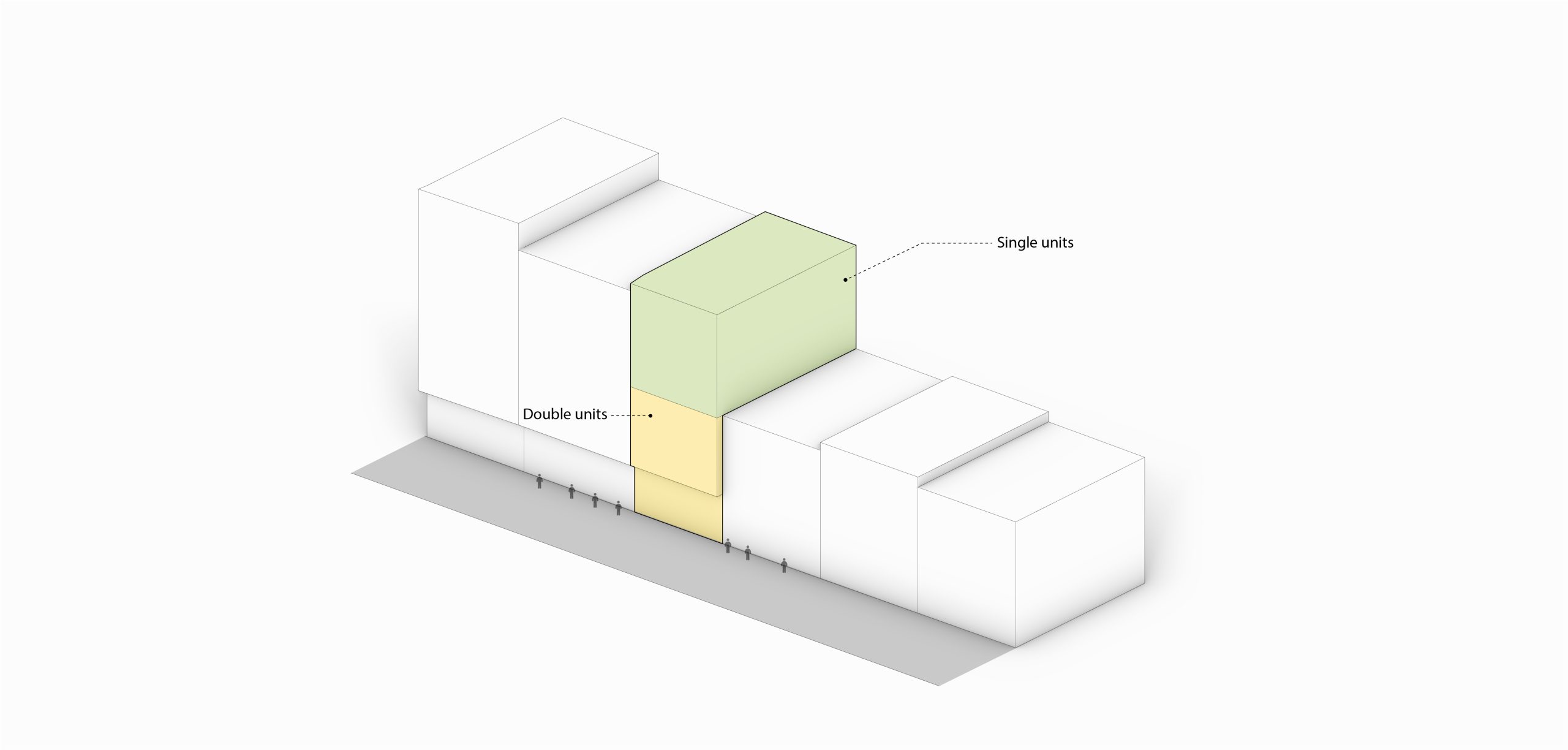
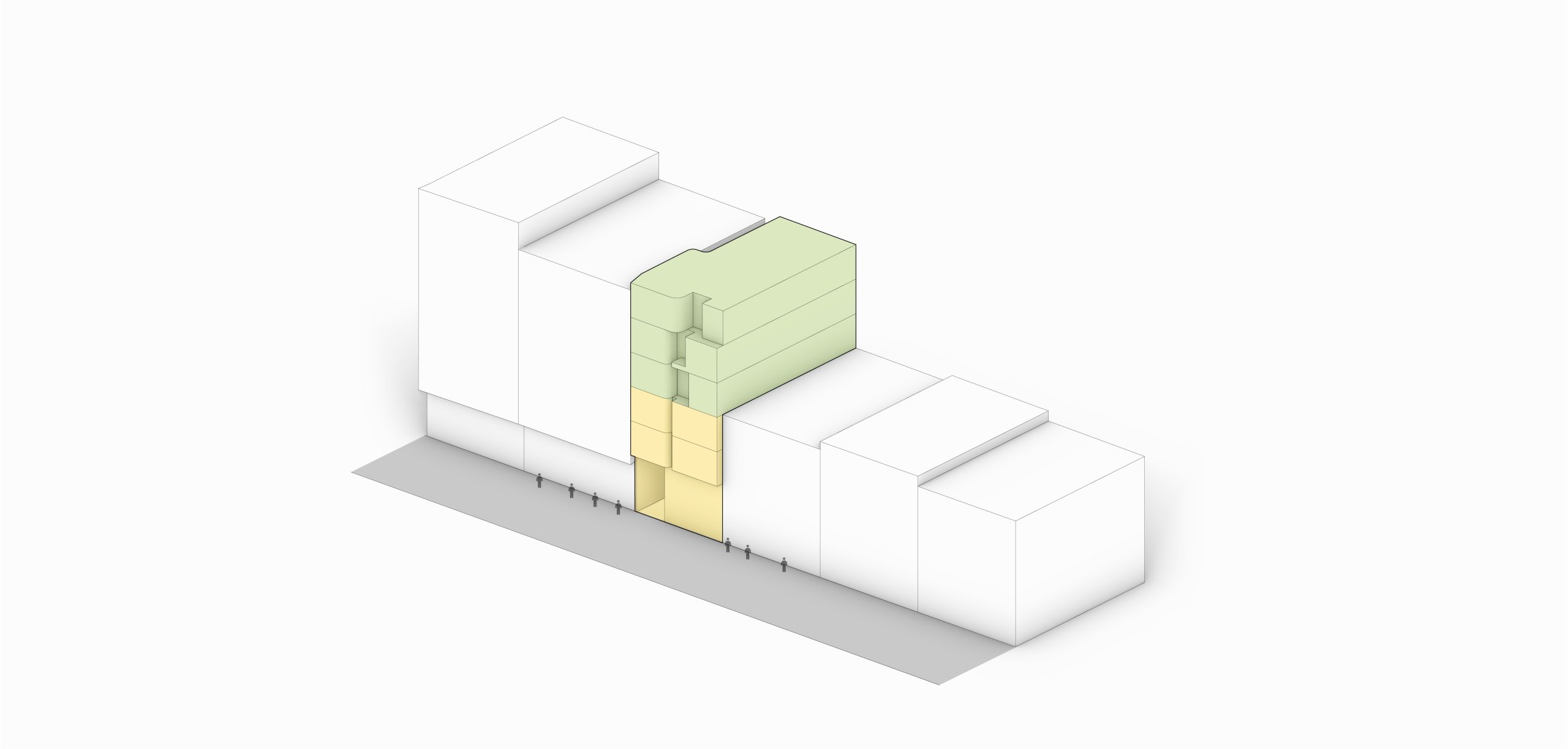
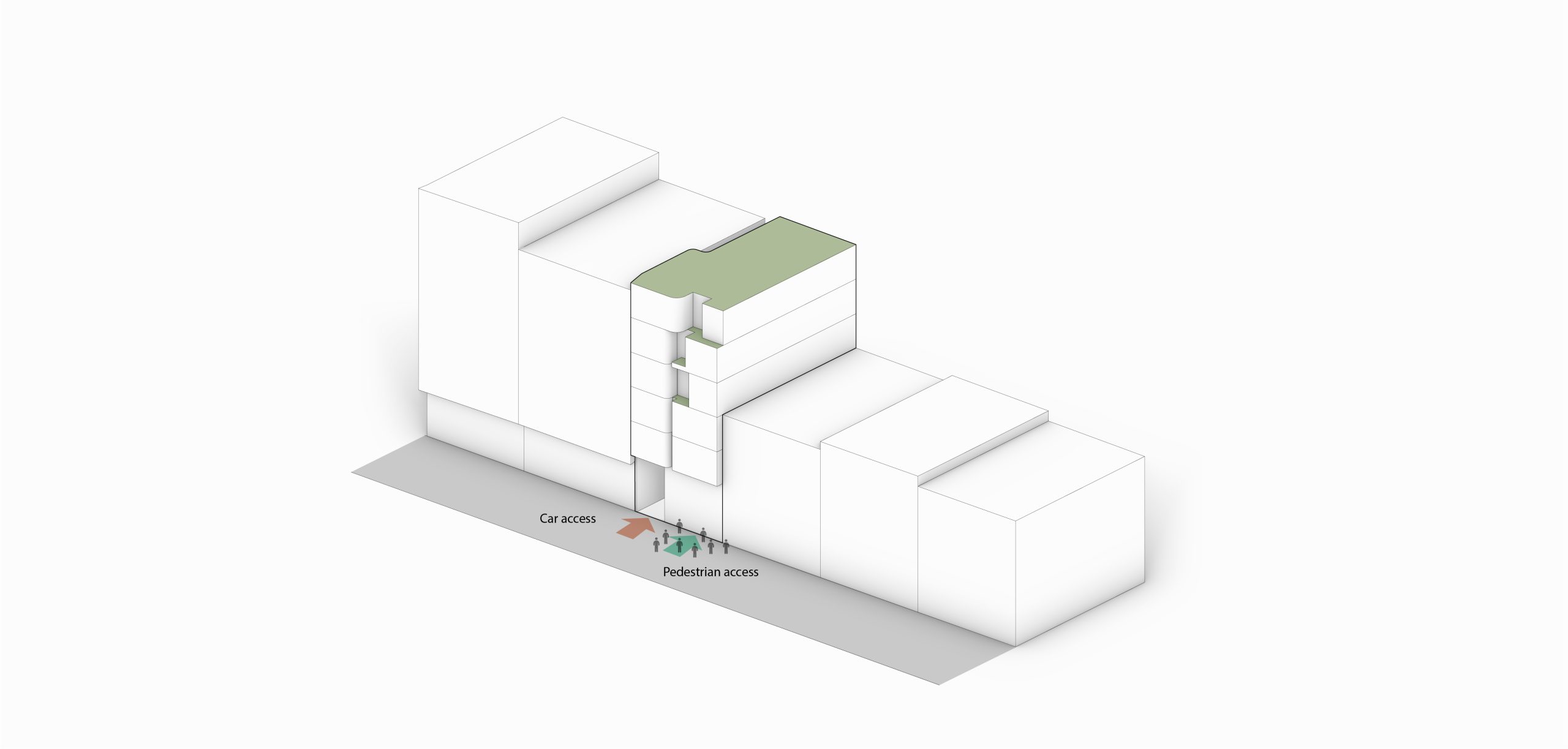
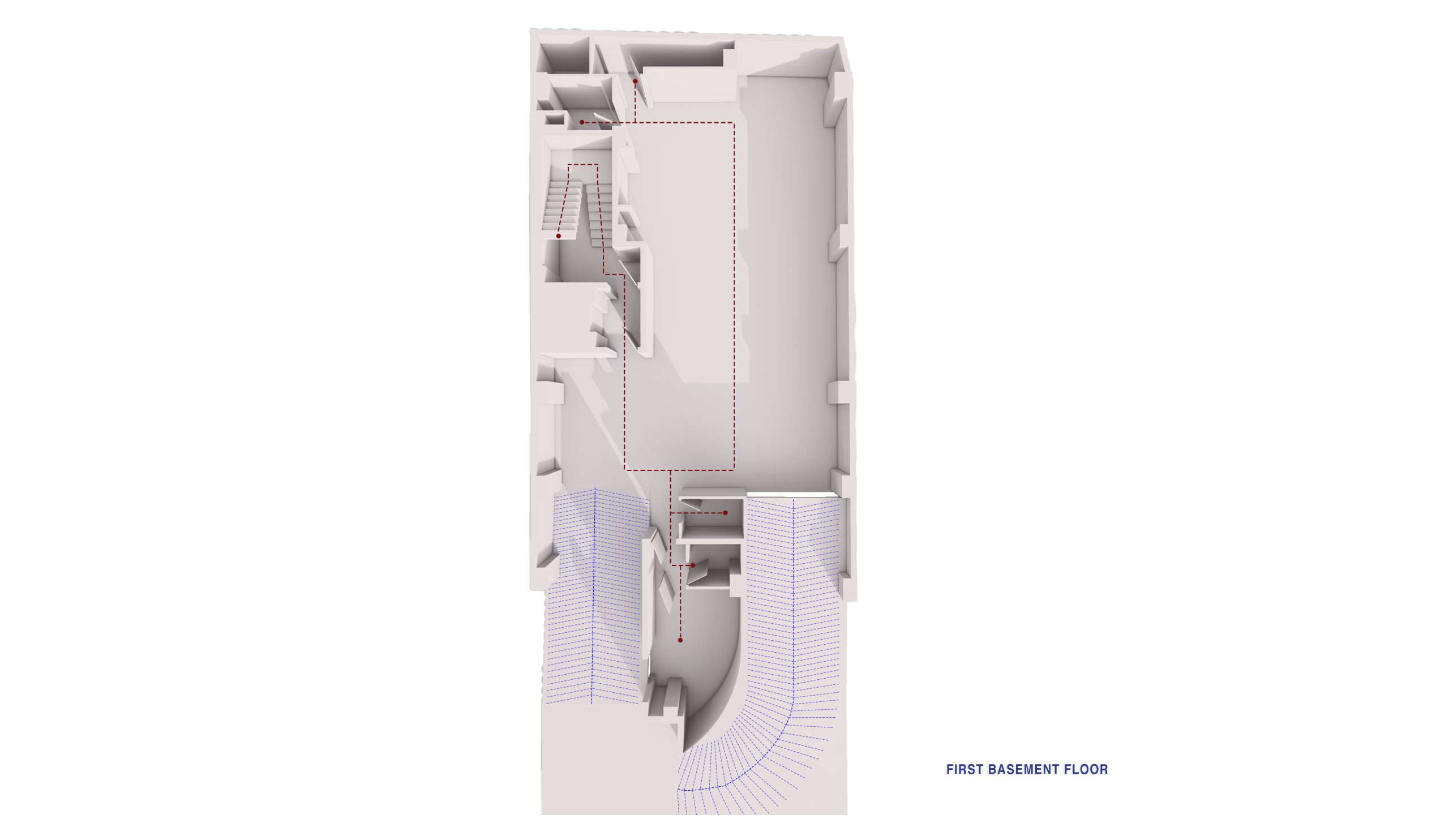
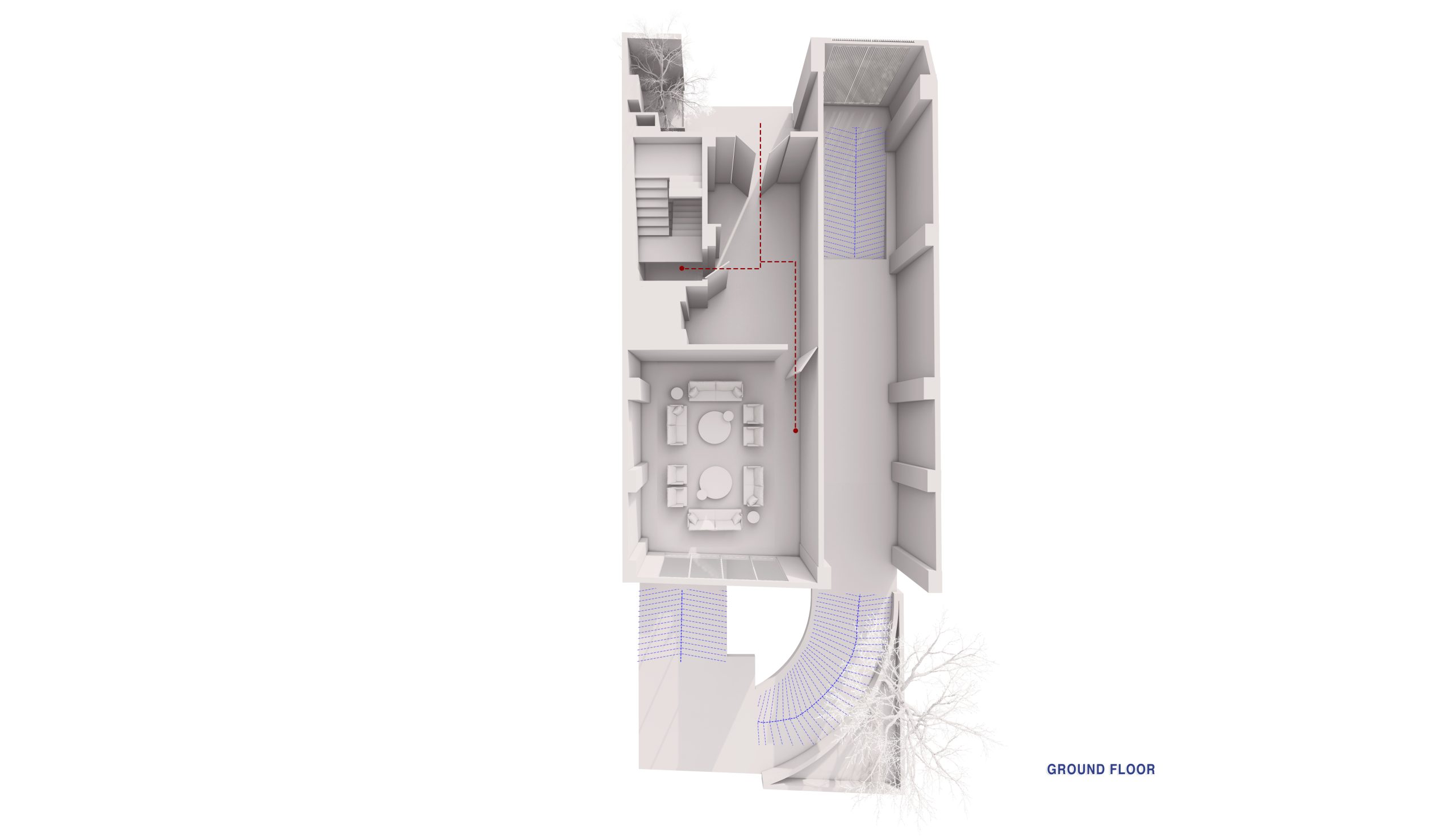
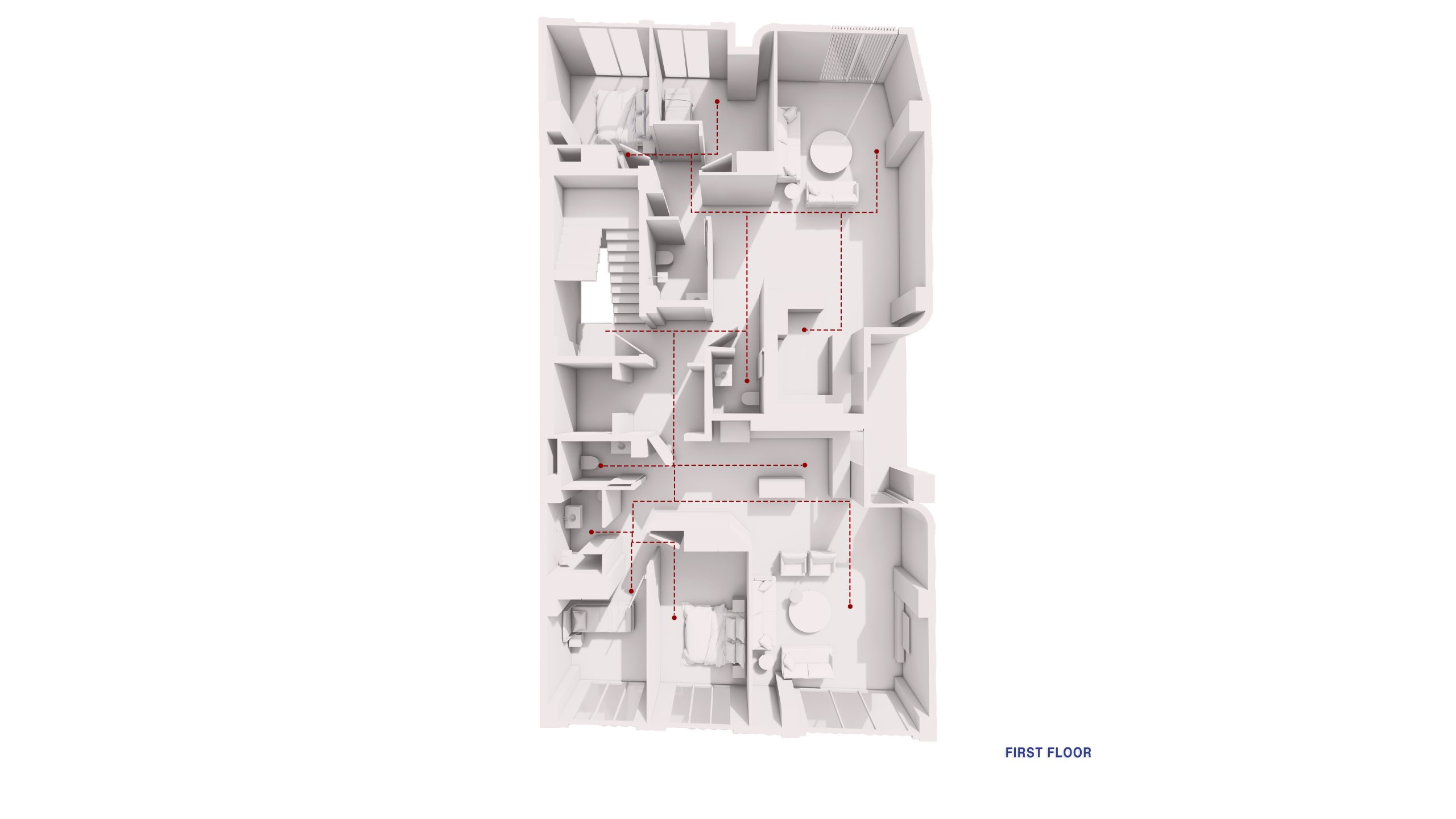
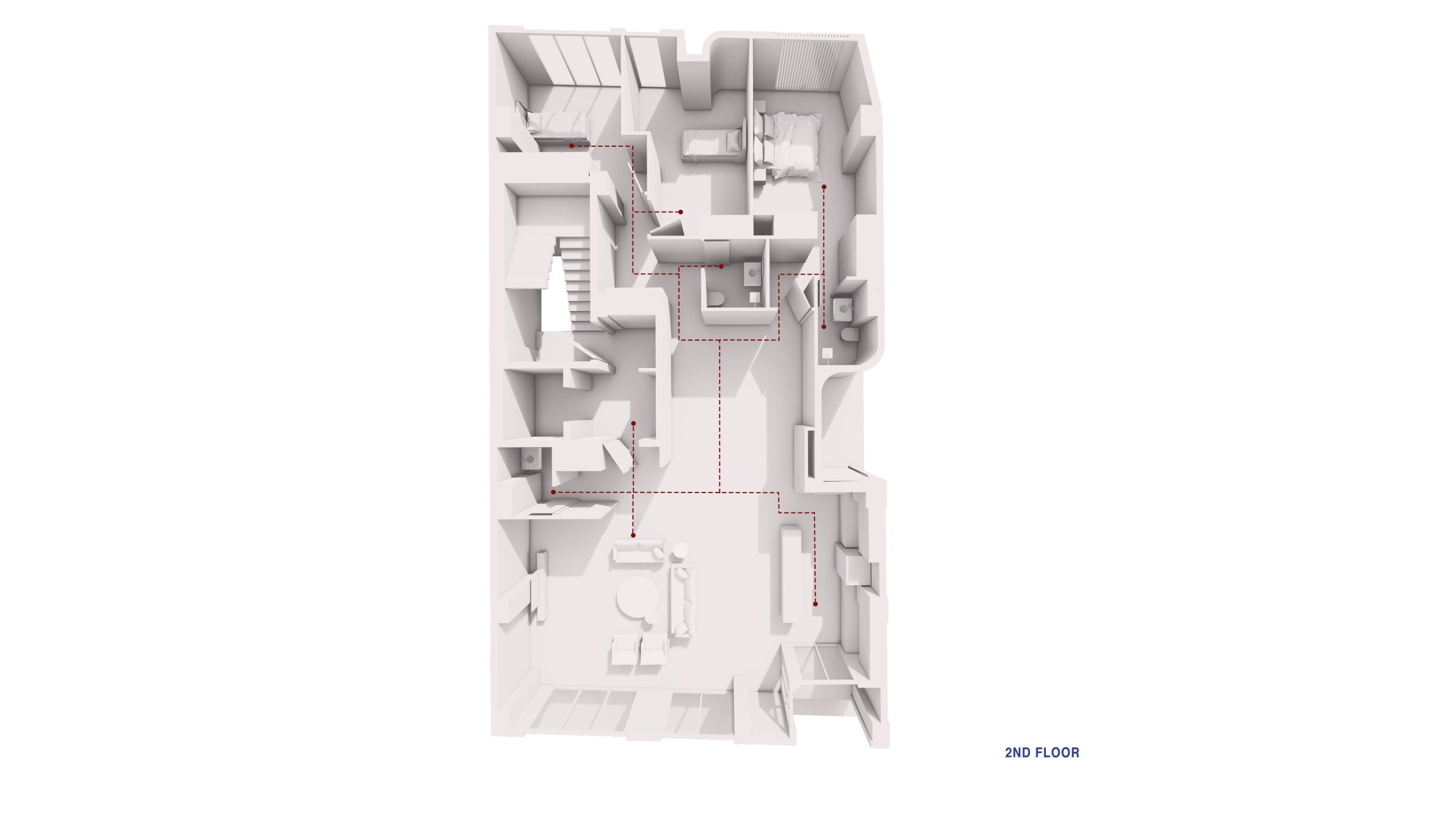
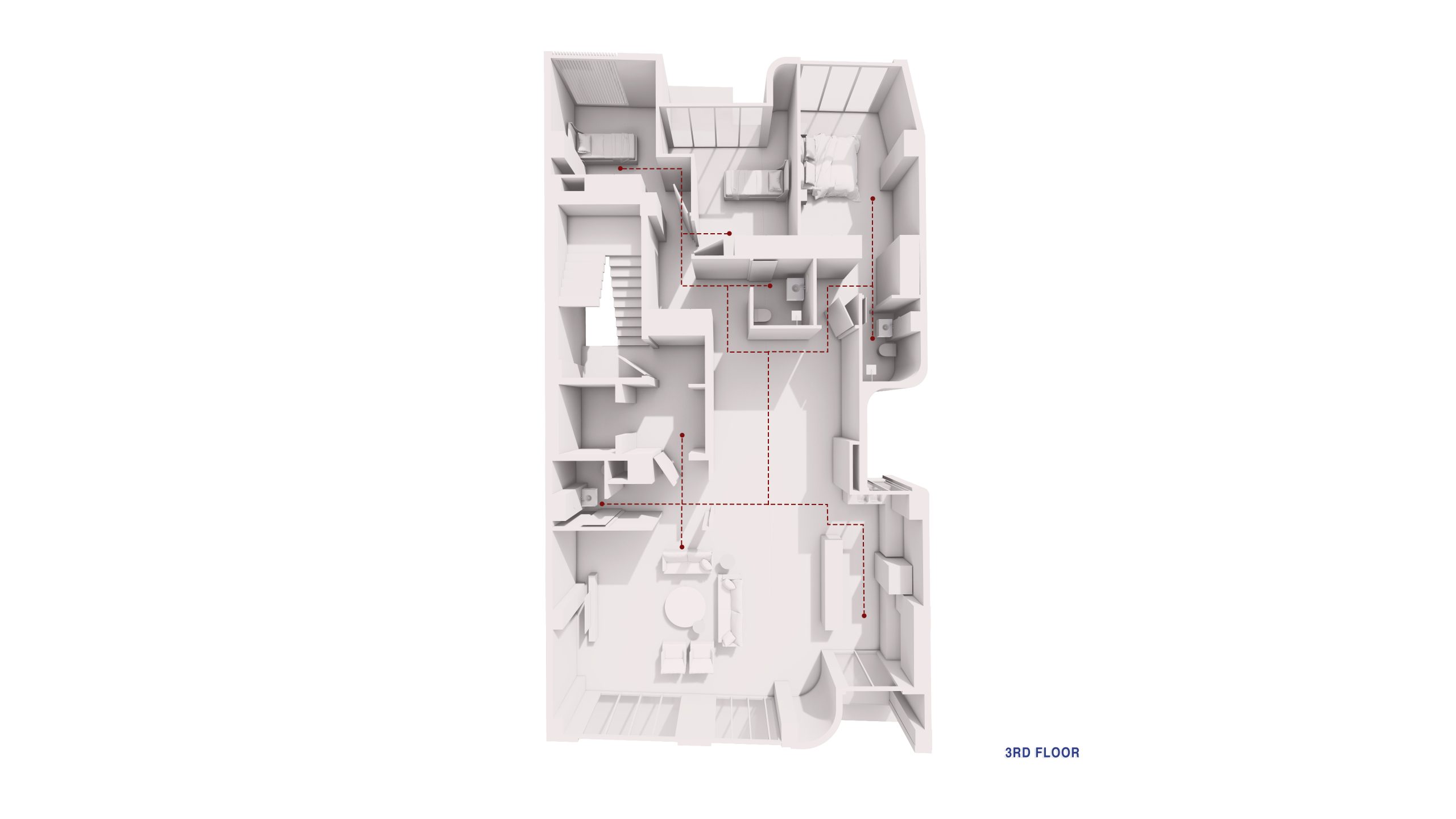
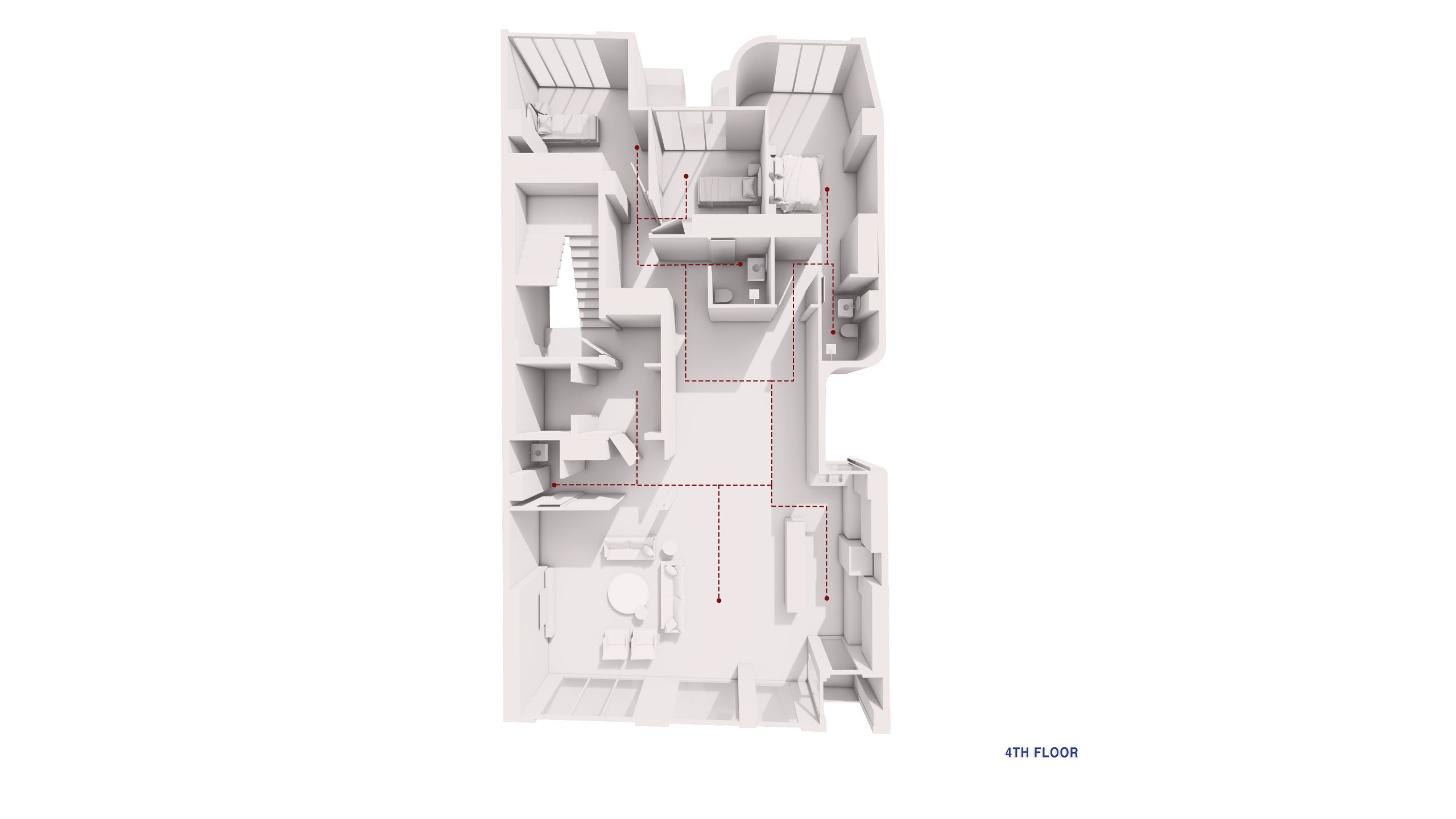
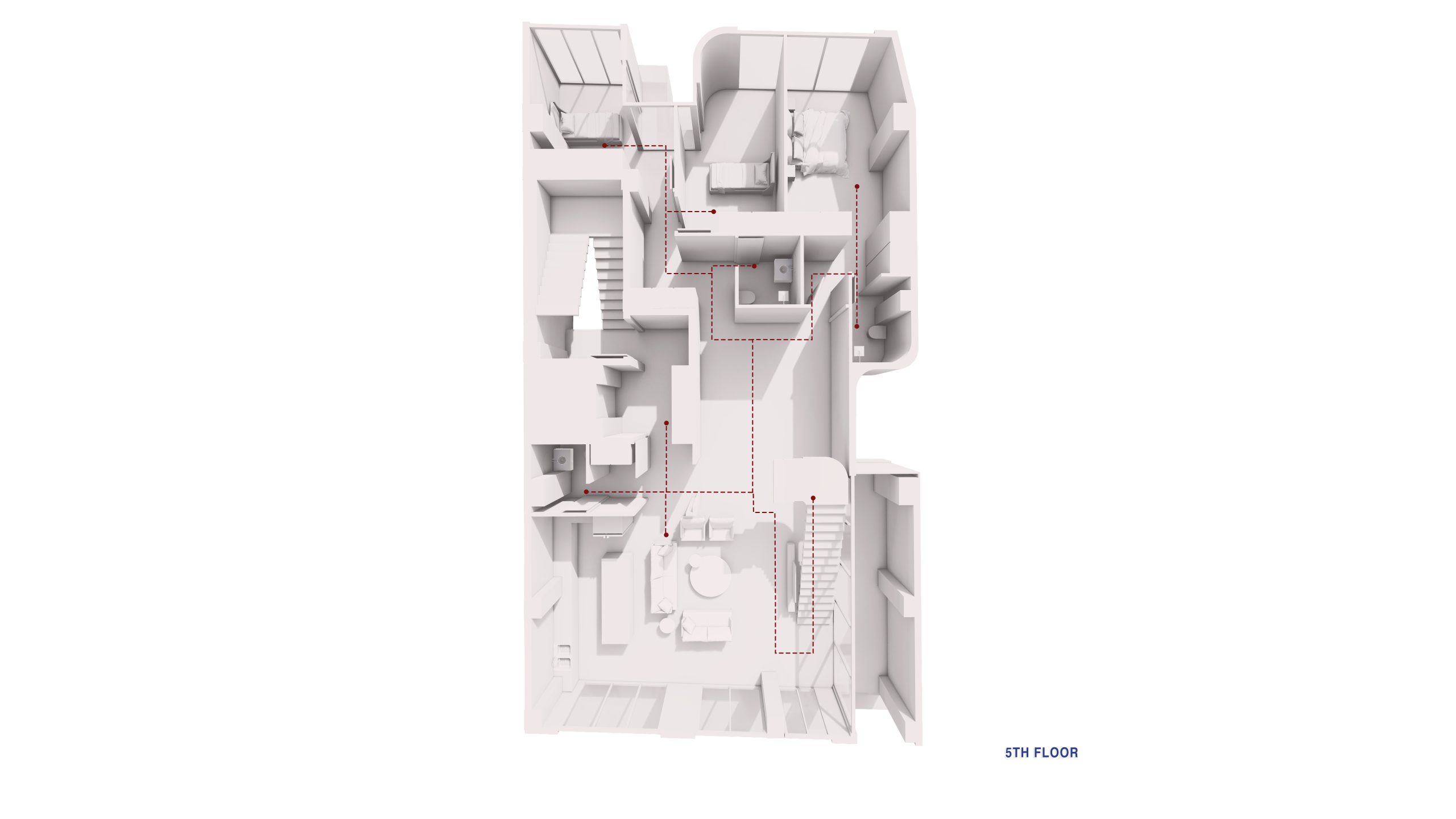
The Mehran project is a residential development comprising five floors, with a ground floor housing a lobby and meeting hall, and two basement levels designated for parking. The first residential floor accommodates two 2-bedroom units, while the upper floors consist of single units. Meeting municipal regulations, functional demands, and economic priorities has resulted in a structure not significantly different from conventional urban buildings.
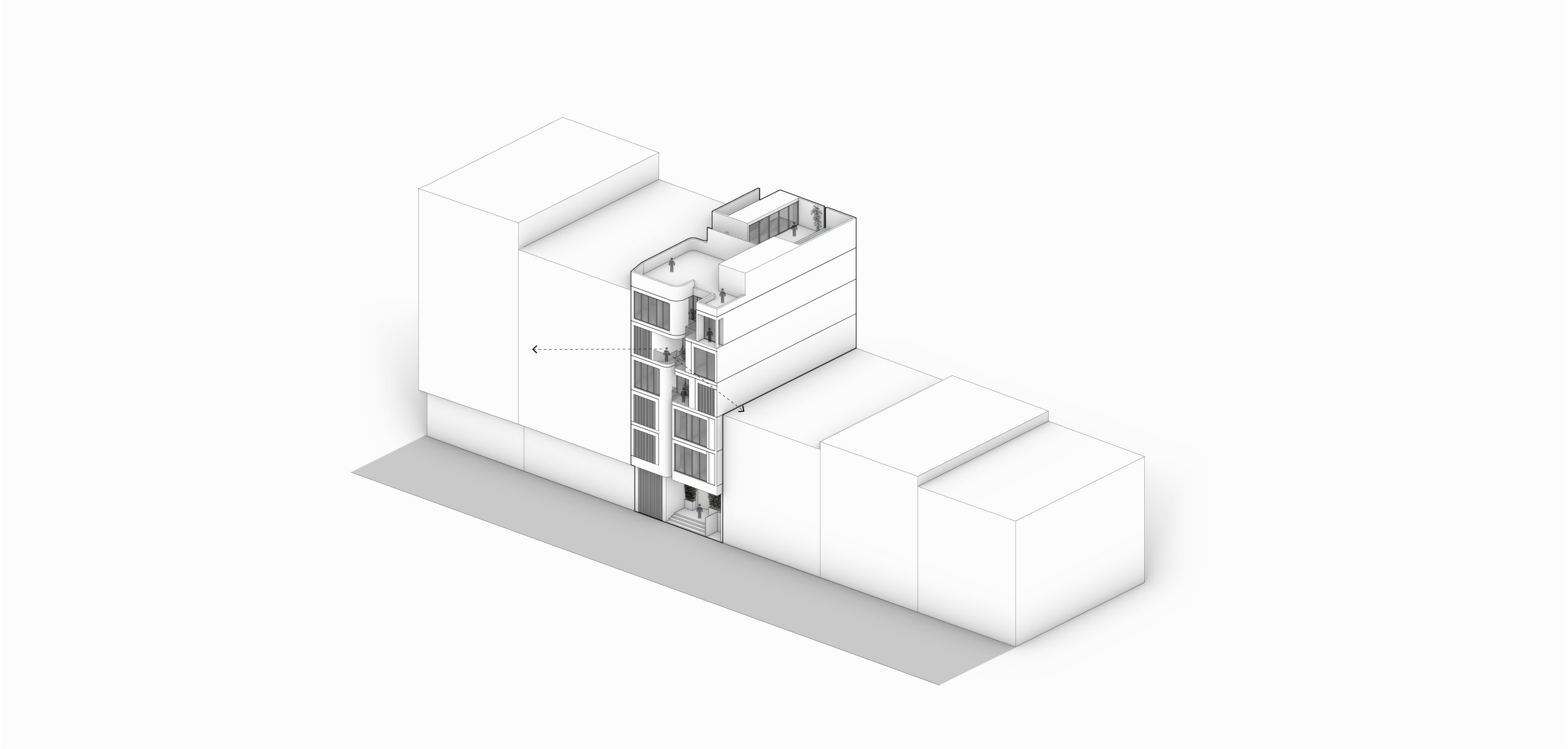
The project’s innovation lies in the connection established between a portion of the roof and the upper residential floor. A staircase within the upper floor’s living space provides private access to a section of the roof, creating an attractive addition that strengthens residents’ connection with the sky and surrounding landscapes, offering a semi-open space for recreation and relaxation.
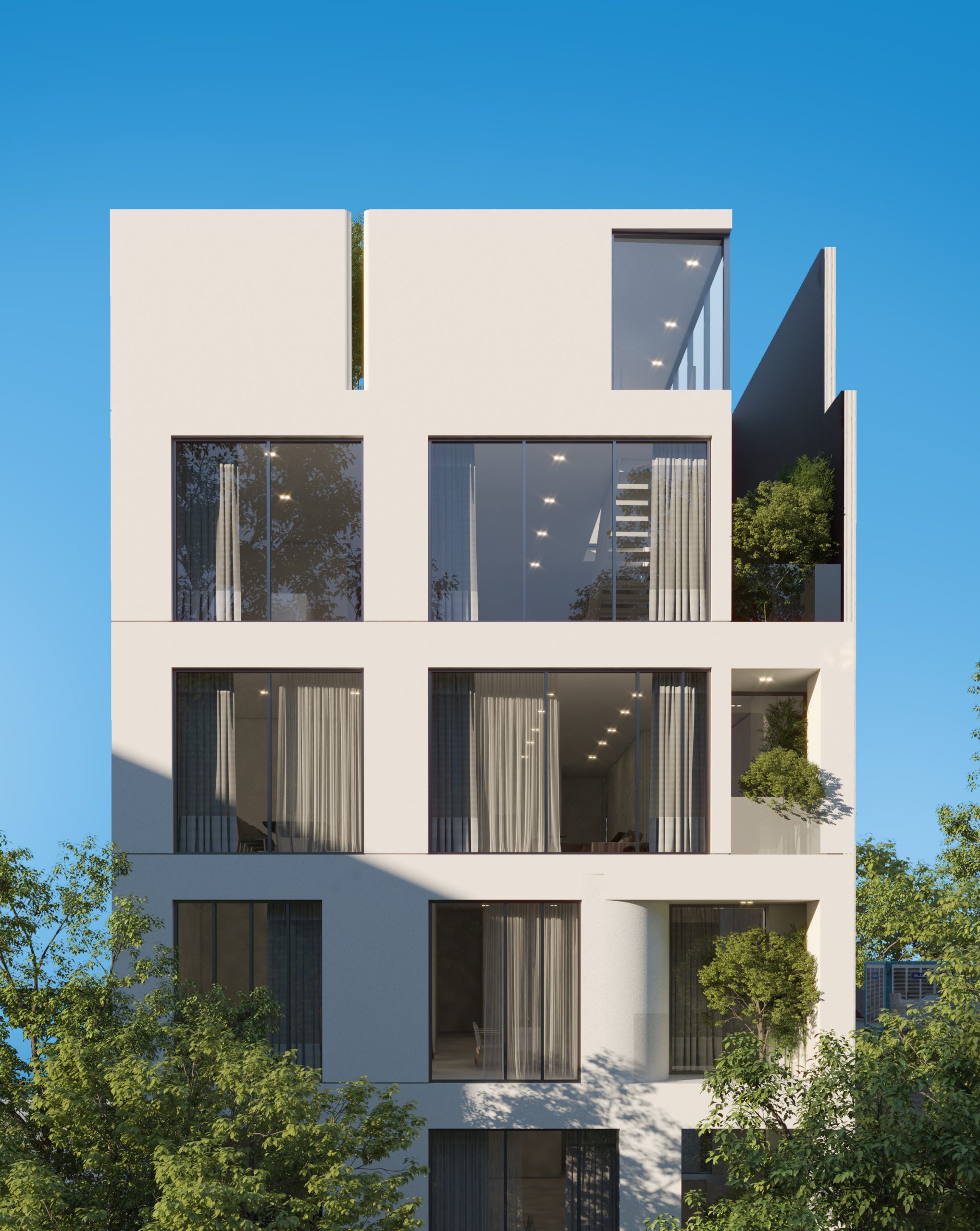
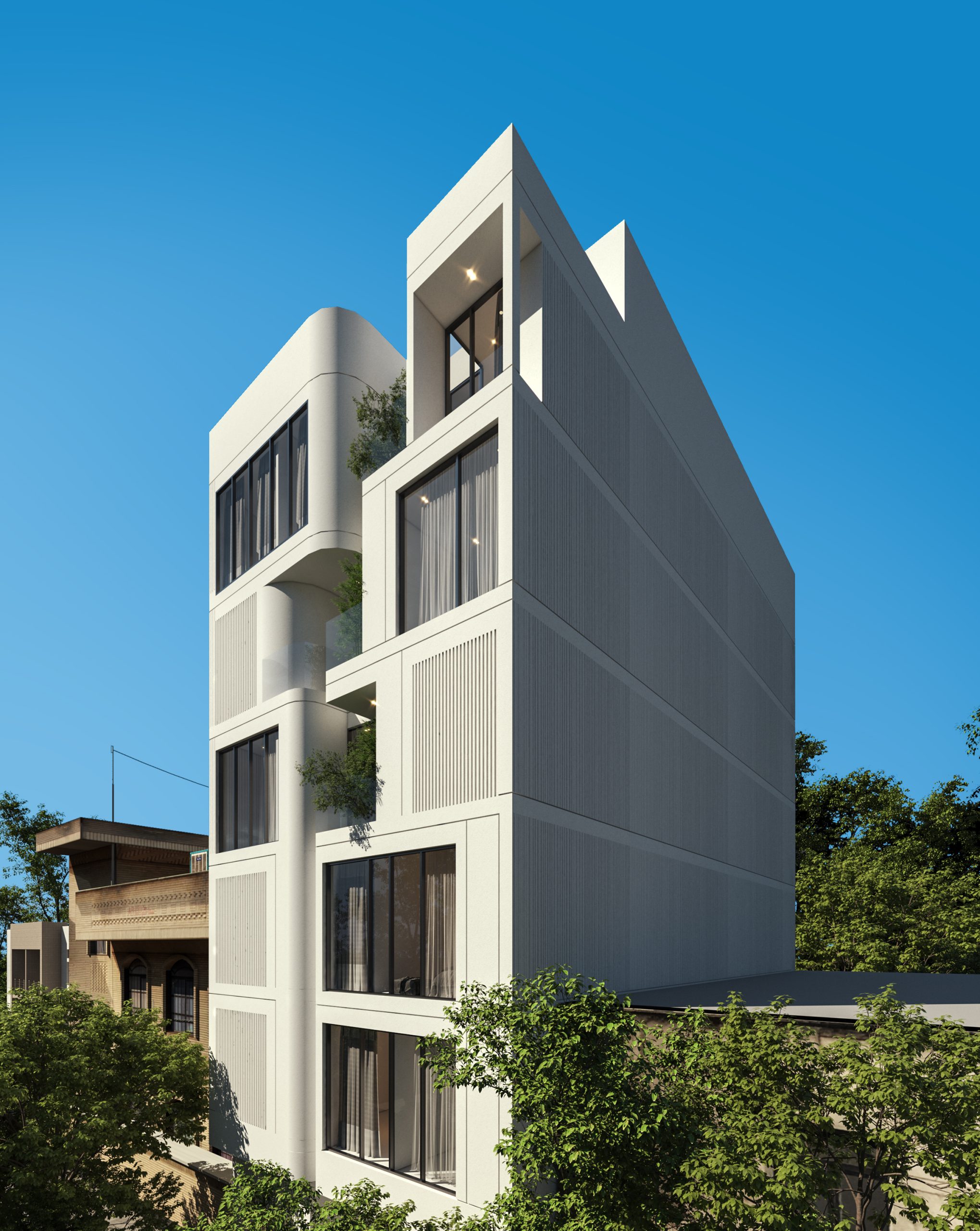
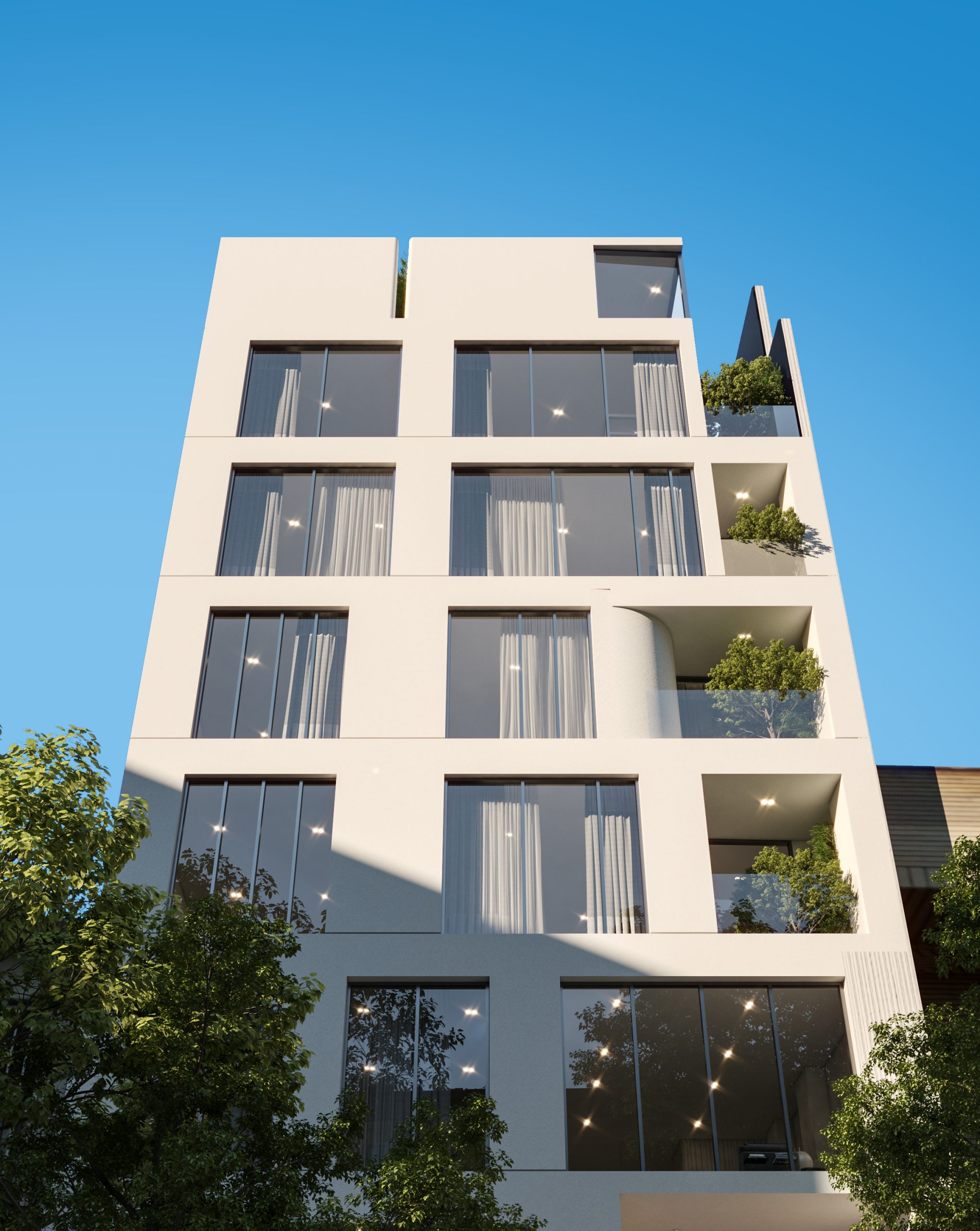
On the northern facade, terraces on various floors challenge the dominance of economic considerations over architectural design, enhancing both the facade’s aesthetic appeal and residents’ connection with nature.
The interplay between mass and void, echoed in different rhythms throughout the floors, lends the facade a dynamic and attractive appearance. The inclusion of terraces adds depth to the facade’s structure, while curved edges and vegetation create a sense of softness and tranquility, contrasting with the facade’s angular elements, reinforcing the concept of residence.
In essence, the Mehran residential project endeavors to challenge economic constraints and move towards creating spatial qualities within limited means, prioritizing minimal aesthetics and formal purity to achieve a distinctive and impressive appearance, consistent with our office’s design philosophy.
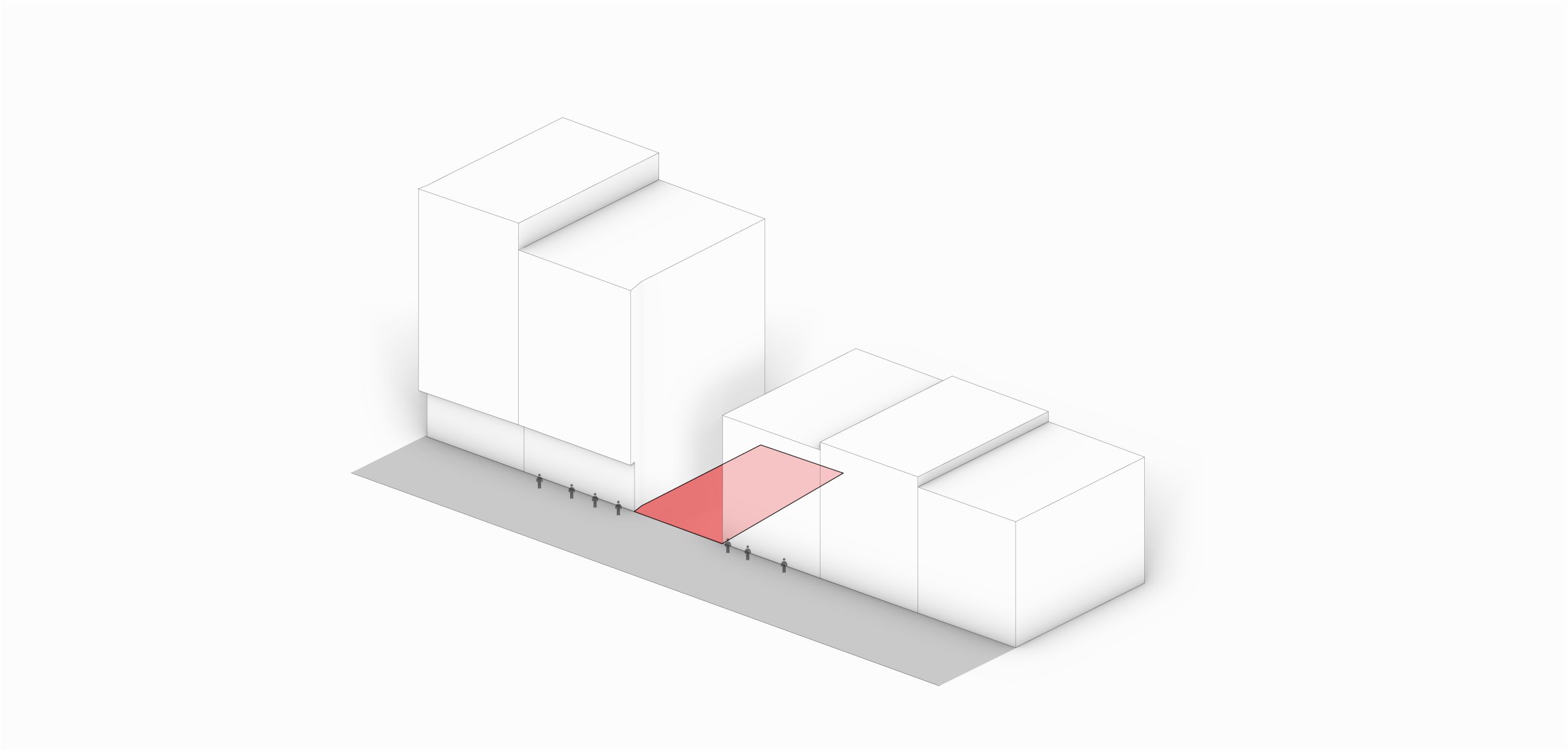
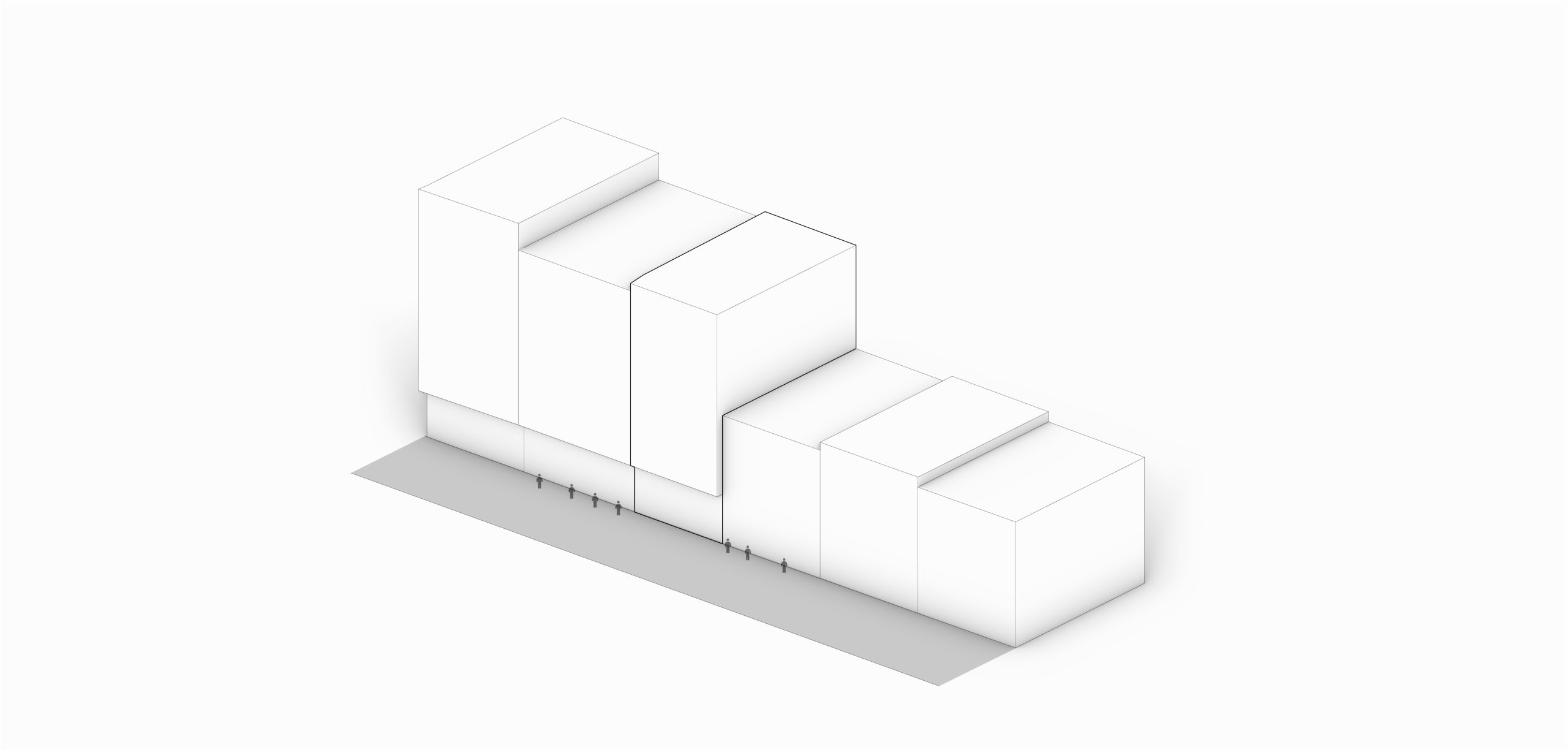
The overall layout and geometry of the volumes, while creating visual dynamism in the facade, have guided the residents’ gaze towards the surrounding landscapes and green spaces. In addition to enhancing privacy, this solution has improved natural lighting, proper ventilation, and increased the quality of the building’s interaction with the urban context.